Kulliyat-e-Iqbal: Urdu

Account upgrade
The download is free, but we offer some paid services. Support us by subscribing
Delete ads and speed up browsing the library.
The download starts with the click of a button without waiting for the book to be ready.
No limits for download times.
You can upload unlimited books in the library.
Enable readers to download your books without waiting.
Delete ads on the books that you publish.
No problems with download links for your uploaded books.
Book Kulliyat E Iqbal Urdu
Copyright reserved
The book cannot be previewed or downloaded in order to preserve the copyright of the author and publishing house
Not available digitally or on paper through the Noor Library, it is for rating and review

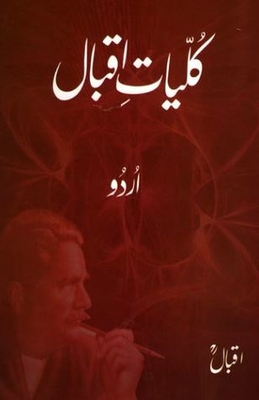

Kulliyat-e-Iqbal: Urdu
| Author: | Muhammad Iqbal |
| Category: | Urdu Language [Edit] |
| Language: | English |
| Publisher: | Ferozsons |
| Pages: | 704 |
| Rank: | 136,960 No 1 most popular |
| Short link: | Copy |
| More books like this book | |

Muhammad Iqbal
The Author Book Kulliyat-e-Iqbal: Urdu .
Sir Allama Mohammad Iqbal also known as Allama Iqbal was born in 1877 in Sialkot, Punjab, in British Ruled India, now Pakistan, and was educated in the local school and college in Sialkot, before going on the university in Lahore. There he studied Arabic and philosophy as an undergraduate, then in 1899 did an M.A. in philosophy (being ranked first in the Punjab, and awarded a Gold Medal). He was a Sir Allama Mohammad Iqbal also known as Allama Iqbal was born in 1877 in Sialkot, Punjab, in British Ruled India, now Pakistan, and was educated in the local school and college in Sialkot, before going on the university in Lahore. There he studied Arabic and philosophy as an undergraduate, then in 1899 did an M.A. in philosophy (being ranked first in the Punjab, and awarded a Gold Medal). He was appointed to a Readership in Arabic at the Oriental College in Lahore, and over the next few years became well known as a poet, as well as writing his first book (in Urdu), The Knowledge of Economics (1903).
In 1905 he travelled to Europe to continue his philosophical studies, first at Cambridge, then at Munich, where he obtained his doctorate with a thesis entitled The Development of Metaphysics in Persia. From 1907 to 1908 he was Professor of Arabic at the University of London; during this period he studied for the bar, becoming a barrister in 1908, when he returned to Lahore to practise law. While practising as an advocate at the Lahore High Court he continued to a part-time academic career as professor of philosophy and English Literature, being appointed Professor of Philosophy at the Government College, Lahore in 1911. He was knighted in 1923.
Despite his law practice, his philosophical work, and his gradual entry into politics, first as a member of the Punjab Legislative Council and later as president of the All India Muslim League, Iqbal was probably best known and respected as a poet. Nevertheless, his other activities brought him some measure of fame, especially six lectures that he gave at Madras, Osmania University at Hyderabad, and Aligarh, which were later published as The Reconstruction of Religious Thought in Islam (1930). During the early thirties he travelled extensively in the Middle East and Europe, participating in international political conferences, meeting philosophers and politicians, and writing.
His political view was that in theory a Muslim state wasn't desirable, as he held to the ideal of a world-wide Muslim community; nevertheless, he held that, at least in the short and medium terms, the only way for Indian Muslims to be able to live according to the tenets of Islam was in such a state, and he campaigned accordingly. He died in Lahore in 1938, some nine years before the creation of Pakistan, where his birthday is celebrated as national holiday.
Iqbal's philosophical work involved bringing various philosophical influences, including Leibniz, Hegel, and Nietzsche, to his Islamic scholarship, thus holding out the promise of a revival of genuine Islamic philosophical thought — a return of Islam to its place in the philosophical world. That promise has yet to be truly fulfilled, though it remains in place.
"To exist in pure duration is to be a self, and to be a self is to be able to say 'I am'." (The Reconstruction of Religious Thought in Islam p.56)
Book Description
Complete Urdu poetry of Dr. Allama Mohammad Iqbal, one of the greatest poets of Urdu and Persian.

Copyright reserved
The book cannot be previewed or downloaded in order to preserve the copyright of the author and publishing house
Not available digitally or on paper through the Noor Library, it is for rating and review
Share the book :
Book Review "Kulliyat-e-Iqbal: Urdu"


Other books like "Kulliyat-e-Iqbal: Urdu"




If there is a problem with the book, please report through one of the following links:
Report the book or by Contact us
E-books are complementary and supportive of paper books and never cancel it. With the click of a button, the e-book reaches anyone, anywhere in the world.
E-books may weaken your eyesight due to the glare of the screen. Support the book publisher by purchasing his original paper book. If you can access it and get it, do not hesitate to buy it.
Publish your book now for free