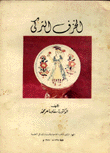
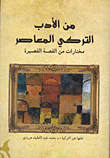
Faculties Of Turkish Notification Shahriar With The Accession Of Haider Babayah Salam

Account upgrade
The download is free, but we offer some paid services. Support us by subscribing
Delete ads and speed up browsing the library.
The download starts with the click of a button without waiting for the book to be ready.
No limits for download times.
You can upload unlimited books in the library.
Enable readers to download your books without waiting.
Delete ads on the books that you publish.
No problems with download links for your uploaded books.
Book Faculties Of Turkish Notification Shahriar With The Accession Of Haider Babayah Salam
Copyright reserved
The book cannot be previewed or downloaded in order to preserve the copyright of the author and publishing house
Not available digitally or on paper through the Noor Library, it is for rating and review



Faculties Of Turkish Notification Shahriar With The Accession Of Haider Babayah Salam
| Author: | شهریار |
| Category: | Islamic Poetry [Edit] |
| Language: | Arabic |
| Publisher: | نگاه، 1382 (first published 1995) |
| Release Date: | 01 Jan 2003 |
| Pages: | 316 |
| Rank: | 683,656 No 1 most popular |
| Short link: | Copy |
| More books like this book | |
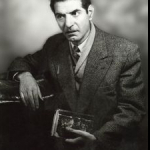
Shahryar
The Author Book Faculties Of Turkish Notification Shahriar With The Accession Of Haider Babayah Salam .
Seyyed Mohammad Hossein Behjat-Tabrizi (Persian: سید محمدحسین بهجت تبریزی Azerbaijani: Məhəmmədhüseyn Şəhriyar) (1906-September 18, 1988), chiefly known by his pen name as Shahriar (or Shahryar / Shahriyar شهریار), was a legendary Iranian poet.
Born in Tabriz, an ethnic Iranian Azeri, Shahriar came to Tehran in 1921 and continued his studies in the Dar-ol-Fonoun high school and started studying me Seyyed Mohammad Hossein Behjat-Tabrizi (Persian: سید محمدحسین بهجت تبریزی Azerbaijani: Məhəmmədhüseyn Şəhriyar) (1906-September 18, 1988), chiefly known by his pen name as Shahriar (or Shahryar / Shahriyar شهریار), was a legendary Iranian poet.
Born in Tabriz, an ethnic Iranian Azeri, Shahriar came to Tehran in 1921 and continued his studies in the Dar-ol-Fonoun high school and started studying medicine after graduation from Dar-ol-Fonoun in 1924. But he fell in love, left his studies about a year before receiving his M.D. degree, and went to Khorasan. He returned to Tehran in 1935 and started working in the Agricultural Bank of Iran.
Shahriar was the first Iranian to write significant poetry in Azeri. He published his first book of poems in 1929, with prefaces by Mohammad Taghi Bahar, Saeed Nafisi, and Pezhman Bakhtiari. His poems are mainly influenced by Hafez. His most famous poem Heydar-Baabaayaa Salaam, in Azerbaijani, is considered to be among the best modern poems in the language and has been turned into a few plays.
His most famous Azeri work Heydar Babaya Salam, Published in 1954, won the immense affection of the both the Turkic and Iranian speakers.

Copyright reserved
The book cannot be previewed or downloaded in order to preserve the copyright of the author and publishing house
Not available digitally or on paper through the Noor Library, it is for rating and review
Share the book :
Book Review "Faculties Of Turkish Notification Shahriar With The Accession Of Haider Babayah Salam"

Book Quotes "Faculties Of Turkish Notification Shahriar With The Accession Of Haider Babayah Salam"

Other books like "Faculties Of Turkish Notification Shahriar With The Accession Of Haider Babayah Salam"

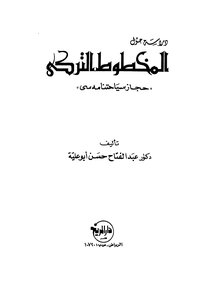



If there is a problem with the book, please report through one of the following links:
Report the book or by Contact us
E-books are complementary and supportive of paper books and never cancel it. With the click of a button, the e-book reaches anyone, anywhere in the world.
E-books may weaken your eyesight due to the glare of the screen. Support the book publisher by purchasing his original paper book. If you can access it and get it, do not hesitate to buy it.
Publish your book now for free