Haqiqa Al-Saada Wa Manaha Fi Al-Islam The Meaning And Experience Of Happiness In Islam

Account upgrade
The download is free, but we offer some paid services. Support us by subscribing
Delete ads and speed up browsing the library.
The download starts with the click of a button without waiting for the book to be ready.
No limits for download times.
You can upload unlimited books in the library.
Enable readers to download your books without waiting.
Delete ads on the books that you publish.
No problems with download links for your uploaded books.
Book Haqiqa Al Saada Wa Manaha Fi Al Islam The Meaning And Experience Of Happiness In Islam
Copyright reserved
The book cannot be previewed or downloaded in order to preserve the copyright of the author and publishing house
Not available digitally or on paper through the Noor Library, it is for rating and review

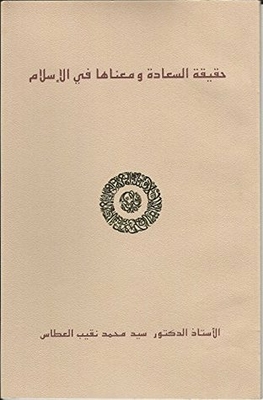

Haqiqa Al-Saada Wa Manaha Fi Al-Islam The Meaning And Experience Of Happiness In Islam
| Author: | Syed Muhammad Naquib Al-Attas |
| Category: | Rights In Islam [Edit] |
| Language: | English |
| Publisher: | International Institute of Islamic Thought and Civilization |
| Pages: | 30 |
| Rank: | 161,461 No 1 most popular |
| Short link: | Copy |
| More books like this book | |

Syed Muhammad Naquib
The Author Book Haqiqa Al-Saada Wa Manaha Fi Al-Islam The Meaning And Experience Of Happiness In Islam .
Syed Muhammad Naquib al-Attas, born September 5, 1931 in Bogor, Java, is a prominent contemporary Muslim thinker. He is one of the few contemporary scholars who is thoroughly rooted in the traditional Islamic sciences and who is equally competent in theology, philosophy, metaphysics, history, and literature. His thought is integrated, multifaceted and creative. Al-Attas’ philosophy and methodology Syed Muhammad Naquib al-Attas, born September 5, 1931 in Bogor, Java, is a prominent contemporary Muslim thinker. He is one of the few contemporary scholars who is thoroughly rooted in the traditional Islamic sciences and who is equally competent in theology, philosophy, metaphysics, history, and literature. His thought is integrated, multifaceted and creative. Al-Attas’ philosophy and methodology of education have one goal: Islamization of the mind, body and soul and its effects on the personal and collective life on Muslims as well as others, including the spiritual and physical non-human environment. He is the author of twenty-seven authoritative works on various aspects of Islamic thought and civilization, particularly on Sufism, cosmology, metaphysics, philosophy and Malay language and literature.
Al-Attas was born into a family with a history of illustrious ancestors, saints, and scholars. He received a thorough education in Islamic sciences, Malay language, literature and culture. His formal primary education began at age 5 in Johor, Malaysia, but during the Japanese occupation of Malaysia, he went to school in Java, in Madrasah Al-`Urwatu’l-wuthqa, studying in Arabic. After World War II in 1946 he returned to Johor to complete his secondary education. He was exposed to Malay literature, history, religion, and western classics in English, and in a cultured social atmosphere developed a keen aesthetic sensitivity. This nurtured in al-Attas an exquisite style and precise vocabulary that were unique to his Malay writings and language. After al-Attas finished secondary school in 1951, he entered the Malay Regiment as cadet officer no. 6675. There he was selected to study at Eton Hall, Chester, Wales and later at the Royal Military Academy, Sandhurst, England (952 -55). This gave him insight into the spirit and style of British society. During this time he was drawn to the metaphysics of the Sufis, especially works of Jami, which he found in the library of the Academy. He traveled widely, drawn especially to Spain and North Africa where Islamic heritage had a profound influence on him. Al-Attas felt the need to study, and voluntarily resigned from the King’s Commission to serve in the Royal Malay Regiment, in order to pursue studies at the University of Malaya in Singapore 1957-59. While undergraduate at University of Malay, he wrote Rangkaian Ruba`iyat, a literary work, and Some Aspects of Sufism as Understood and Practised among the Malays. He was awarded the Canada Council Fellowship for three years of study at the Institute of Islamic Studies at McGill University in Montreal. He received the M.A. degree with distinction in Islamic philosophy in 1962, with his thesis “Raniri and the Wujudiyyah of 17th Century Acheh” . Al-Attas went on to the School of Oriental and African Studies, University of London where he worked with Professor A. J. Arberry of Cambridge and Dr. Martin Lings. His doctoral thesis (1962) was a two-volume work on the mysticism of Hamzah Fansuri.
In 1965, Dr. al-Attas returned to Malaysia and became Head of the Division of Literature in the Department of Malay Studies at the University of Malay, Kuala Lumpur. He was Dean of the Faculty of Arts from 1968-70. Thereafter he moved to the new National University of Malaysia, as Head of the Department of Malay Language and Literature and then Dean of the Faculty of Arts. He strongly advocated the use of Malay as the language of instruction at the university level and proposed an integrated method of studying Malay language, literature and culture so that the role and influence of Islam and its relationship with other languages and cultures would be studied with clarity. He founded and directed the Institute of Malay Language, Literature, and Culture (IBKKM) at the National University of Malaysia in 1973 to carry out his vision.
In 1987, with al-Attas as founder and director, the International Institute of Islamic Thought a

Copyright reserved
The book cannot be previewed or downloaded in order to preserve the copyright of the author and publishing house
Not available digitally or on paper through the Noor Library, it is for rating and review
Share the book :
Book Review "Haqiqa Al-Saada Wa Manaha Fi Al-Islam The Meaning And Experience Of Happiness In Islam"

Book Quotes "Haqiqa Al-Saada Wa Manaha Fi Al-Islam The Meaning And Experience Of Happiness In Islam"

Other books like "Haqiqa Al-Saada Wa Manaha Fi Al-Islam The Meaning And Experience Of Happiness In Islam"



If there is a problem with the book, please report through one of the following links:
Report the book or by Contact us
E-books are complementary and supportive of paper books and never cancel it. With the click of a button, the e-book reaches anyone, anywhere in the world.
E-books may weaken your eyesight due to the glare of the screen. Support the book publisher by purchasing his original paper book. If you can access it and get it, do not hesitate to buy it.
Publish your book now for free