The Government Inspector (Hereford Plays)

Account upgrade
The download is free, but we offer some paid services. Support us by subscribing
Delete ads and speed up browsing the library.
The download starts with the click of a button without waiting for the book to be ready.
No limits for download times.
You can upload unlimited books in the library.
Enable readers to download your books without waiting.
Delete ads on the books that you publish.
No problems with download links for your uploaded books.
Book The Government Inspector Hereford Plays
Copyright reserved
The book cannot be previewed or downloaded in order to preserve the copyright of the author and publishing house
Not available digitally or on paper through the Noor Library, it is for rating and review

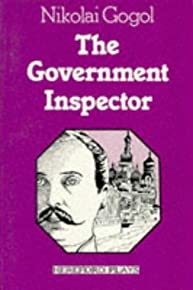

The Government Inspector (Hereford Plays)
| Author: | Nikolai Gogol |
| Category: | Subtitled Plays [Edit] |
| Language: | English |
| Publisher: | Heinemann |
| ISBN: | 435223402 |
| Pages: | 100 |
| Rank: | 176,222 No 1 most popular |
| Short link: | Copy |
| More books like this book | |
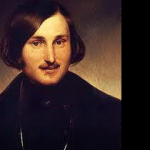
Nikolai Gogol
The Author Book The Government Inspector (Hereford Plays) and the author of 2 another books.
RU:Николай Гоголь
Nikolai Gogol (born in Sorochyntsi, Poltava Governorate, Russian Empire, present-day Ukraine) - Russian writer of Ukrainian descent.
Gogol's mother was a descendant of Polish nobility. Gogol's father Vasyl Hohol-Yanovsky, a Ukrainian writer best known for his plays, died when Gogol was 15 years old. In 1820 Gogol went to a school of higher art in Nizhyn and remained there until 18 RU:Николай Гоголь
Nikolai Gogol (born in Sorochyntsi, Poltava Governorate, Russian Empire, present-day Ukraine) - Russian writer of Ukrainian descent.
Gogol's mother was a descendant of Polish nobility. Gogol's father Vasyl Hohol-Yanovsky, a Ukrainian writer best known for his plays, died when Gogol was 15 years old. In 1820 Gogol went to a school of higher art in Nizhyn and remained there until 1828. It was there that he began writing. Very early he developed a dark and secretive disposition, marked by a painful self-consciousness and boundless ambition. Equally early he developed an extraordinary talent for mimicry which later on made him a matchless reader of his own works.
In 1828, on leaving school, Gogol came to Petersburg. He had hoped for literary fame and brought with him a Romantic poem of German idyllic life – Ganz Küchelgarten. He had it published, at his own expense, under the name of "V. Alov." The magazines he sent it to almost universally derided it. He bought all the copies and destroyed them, swearing never to write poetry again.
Gogol was one of the first masters of the short story, alongside Alexander Pushkin, Prosper Mérimée, E. T. A. Hoffmann, and Nathaniel Hawthorne. He was in touch with the "literary aristocracy", and was taken up by Vasily Zhukovsky and Pyotr Pletnyov, and (in 1831) was introduced to Pushkin.
In 1831, he brought out the first volume of his Ukrainian stories (Evenings on a Farm Near Dikanka), which met with immediate success. He followed it in 1832 with a second volume, and in 1835 by two volumes of stories entitled Mirgorod, as well as by two volumes of miscellaneous prose entitled Arabesques. At this time, Gogol developed a passion for Ukrainian history and tried to obtain an appointment to the history department at Kiev University. His fictional story Taras Bulba, based on the history of Ukrainian cossacks, was the result of this phase in his interests.
Between 1832 and 1836 Gogol worked with great energy, though almost all his work has in one way or another its sources in his four years of contact with Pushkin. Only after the presentation, on 19 April 1836, of his comedy The Government Inspector (Revizor) that he finally came to believe in his literary vocation.
From 1836 to 1848 he lived abroad, travelling throughout Germany and Switzerland, as well as spending the winter of 1836–1837 in Paris.
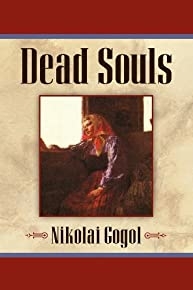
Pushkin's death produced a strong impression on Gogol. His principal work during years following Pushkin's death was the satirical epic Dead Souls. Concurrently, he worked at other tasks – recast Taras Bulba and The Portrait, completed his second comedy, Marriage (Zhenitba), wrote the fragment Rome and his most famous short story, The Overcoat.
After the triumph of Dead Souls, Gogol came to be regarded as a great satirist who lampooned the unseemly sides of Imperial Russia. However, Dead Souls was but the first part of a counterpart to The Divine Comedy. The first part represented the Inferno; the second part was to depict the gradual purification and transformation of the rogue Chichikov under the influence of virtuous publicans and governors – Purgatory.
His last years were spent in restless movement throughout the country. He intensified his relationship with a church elder, Matvey Konstantinovsky. He seems to have strengthened in Gogol the fear of perdition by insisting on the sinfulness of all his imaginative work. His health was undermined by exaggerated ascetic practices and he fell into a state of deep depression. On the night of 24 February 1852, he burned some of his manuscripts, which contained most of the second part of Dead Souls. He explained this as a mistake, a practical joke played on him by the Devil. Soon thereafter, he took to bed, refused all food, and died in great pain nine days later.
For goodread's profile in Russian, see Николай Васильевич Гоголь
Book Description
This series presents a wide choice of 20th-century drama. The books offer scene-by-scene analysis, structured questions and assignment suggestions for GCSE. In this Russian comedy, a young traveller in a provincial town is mistaken for a government inspector.

Copyright reserved
The book cannot be previewed or downloaded in order to preserve the copyright of the author and publishing house
Not available digitally or on paper through the Noor Library, it is for rating and review
Share the book :
Book Review "The Government Inspector (Hereford Plays)"

Book Quotes "The Government Inspector (Hereford Plays)"

Other books like "The Government Inspector (Hereford Plays)"


Other books for "Nikolai Gogol"

If there is a problem with the book, please report through one of the following links:
Report the book or by Contact us
E-books are complementary and supportive of paper books and never cancel it. With the click of a button, the e-book reaches anyone, anywhere in the world.
E-books may weaken your eyesight due to the glare of the screen. Support the book publisher by purchasing his original paper book. If you can access it and get it, do not hesitate to buy it.
Publish your book now for free