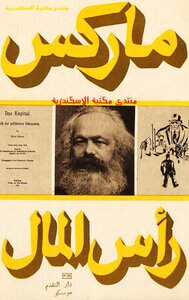
رأس المال - رأس المال: نقد الاقتصاد السياسي (المجلد الأول)

ترقية حسابك
التحميل مجاناً لكن نقدم بعض الخدمات المدفوعة ادعمنا بالإشتراك فيها
حذف الإعلانات وتسريع تصفح المكتبة.
يبدأ التحميل بضغطة زر دون انتظار تجهيز الكتاب.
لا حدود لمرات التحميل.
يمكنك رفع كتب بلا حدود بالمكتبة.
تمكين القراء من تحميل كتبك دون إنتظار.
حذف الاعلانات على الكتب التي تنشرها.
لا مشاكل في روابط التحميل لكتبك المرفوعة.
كتاب رأس المال رأس المال نقد الاقتصاد السياسي المجلد الأول
حقوق النشر محفوظة
لا يمكن قراءة الكتاب أو تحميله حفاظاً على حقوق نشر المؤلف و دار النشر
غير متوفر رقمياً أو ورقياً من خلال مكتبة نور، متروك للتقييم والمراجعة

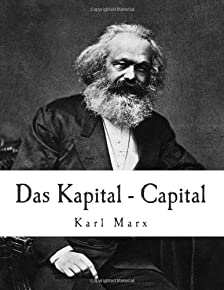

رأس المال - رأس المال: نقد الاقتصاد السياسي (المجلد الأول)
| مؤلف: | Karl Marx |
| قسم: | اقتصاد رياضى [تعديل] |
| اللغة: | الإنجليزية |
| الناشر: | CreateSpace Independent Publishing Platform |
| ردمك ISBN: | 1478245395 |
| تاريخ الإصدار: | 01 يناير 2012 |
| ترتيب الشهرة: | 287,994 رقم 1 هو الأشهر ! |
| رابط مختصر: | نسخ |
| المزيد من الكتب مثل هذا الكتاب | |
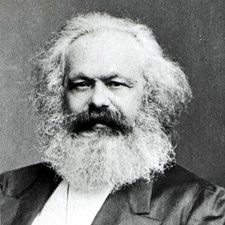
Karl Marx
المؤلف كتاب رأس المال - رأس المال: نقد الاقتصاد السياسي (المجلد الأول) والمؤلف لـ 32 كتب أخرى.
Karl Marx, Ph.D. (University of Jena, 1841) was a social scientist who was a key contributor to the development of Communist theory.
Descended from a long line of rabbis, Marx born in Prussian Rhineland. His father converted to Protestantism shortly before Karl's birth. Educated at the Universities of Bonn, Jena, and Berlin, Marx founded the Socialist newspaper Vorwarts in 1844 in Paris. After bein Karl Marx, Ph.D. (University of Jena, 1841) was a social scientist who was a key contributor to the development of Communist theory.
Descended from a long line of rabbis, Marx born in Prussian Rhineland. His father converted to Protestantism shortly before Karl's birth. Educated at the Universities of Bonn, Jena, and Berlin, Marx founded the Socialist newspaper Vorwarts in 1844 in Paris. After being expelled from France at the urging of the Prussian government, which "banished" Marx in absentia, Marx studied economics in Brussels. He and Engels founded the Communist League in 1847 and published the Communist Manifesto. After the failed revolution of 1848 in Germany, in which Marx participated, he eventually wound up in London. Marx worked as foreign correspondent for several U.S. publications. His Das Kapital came out in three volumes (1867, 1885 and 1894). Marx organized the International and helped found the Social Democratic Party of Germany. Although Marx was not religious, Bertrand Russell later remarked, "His belief that there is a cosmic force called Dialectical Materialism which governs human history independently of human volitions, is mere mythology" (Portraits from Memory, 1956). Marx once quipped, "All I know is that I am not a Marxist" (according to Engels in a letter to C. Schmidt; see Who's Who in Hell by Warren Allen Smith). D. 1883.
Marx began co-operating with Bruno Bauer on editing Hegel's Philosophy of Religion in 1840. Marx was also engaged in writing his doctoral thesis, The Difference Between the Democritean and Epicurean Philosophy of Nature, which he completed in 1841. It was described as "a daring and original piece of work in which Marx set out to show that theology must yield to the superior wisdom of philosophy": the essay was controversial, particularly among the conservative professors at the University of Berlin. Marx decided, instead, to submit his thesis to the liberal University of Jena, whose faculty awarded him his PhD in April 1841. As Marx and Bauer were both atheists, in March 1841 they began plans for a journal entitled Archiv des Atheismus (Atheistic Archives), but it never came to fruition.
Marx has been described as one of the most influential figures in human history. Marx is typically cited, with Émile Durkheim and Max Weber, as one of the three principal architects of modern social science.
More:
وصف الكتاب
This book have footnotes on each page, so you do not need to go all way at back of book to read footnotes and comments. Described by Friedrich Engels as "the bible of the working class," Marx's 1867 classic of political economics quickly became a work of tremendous importance and influence. In addition to his critique of the concept of private property, Marx also offers a thorough analysis of the scientific laws of capitalism and their structural contradictions. In Capital: Critique of Political Economy , Karl Marx proposes that the motivating force of capitalism is in the exploitation of labour, whose unpaid work is the ultimate source of profit and surplus value. The employer can claim right to the profits (new output value), because he or she owns the productive capital assets (means of production), which are legally protected by the State through property rights. In producing capital (money) rather than commodities (goods and services), the workers continually reproduce the economic conditions by which they labour. Capital proposes an explanation of the "laws of motion" of the capitalist economic system, from its origins to its future, by describing the dynamics of the accumulation of capital, the growth of wage labour, the transformation of the workplace, the concentration of capital, commercial competition, the banking system, the decline of the profit rate, land-rents, et cetera.

حقوق النشر محفوظة
لا يمكن قراءة الكتاب أو تحميله حفاظاً على حقوق نشر المؤلف و دار النشر
غير متوفر رقمياً أو ورقياً من خلال مكتبة نور، متروك للتقييم والمراجعة
شارك الكتاب :
مراجعة كتاب "رأس المال - رأس المال: نقد الاقتصاد السياسي (المجلد الأول)"

اقتباسات كتاب "رأس المال - رأس المال: نقد الاقتصاد السياسي (المجلد الأول)"

كتب أخرى مثل "رأس المال - رأس المال: نقد الاقتصاد السياسي (المجلد الأول)"

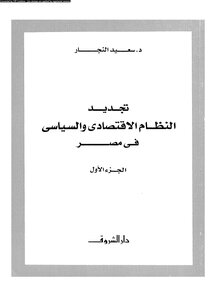
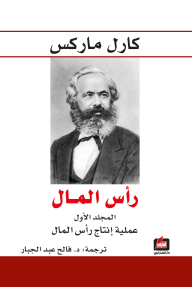



كتب أخرى لـ "Karl Marx"



فى حالة وجود مشكلة بالكتاب الرجاء الإبلاغ من خلال أحد الروابط التالية:
بلّغ عن الكتاب أو من خلال التواصل معنا
الكتب الإلكترونية هي مكملة وداعمة للكتب الورقية ولا تلغيه أبداً بضغطة زر يصل الكتاب الإلكتروني لأي شخص بأي مكان بالعالم.
قد يضعف نظرك بسبب توهج الشاشة، أدعم ناشر الكتاب بشراءك لكتابه الورقي الأصلي إذا تمكنت من الوصول له والحصول عليه فلا تتردد بشراءه.
أنشر كتابك الآن مجانا