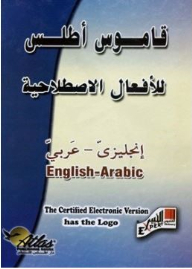
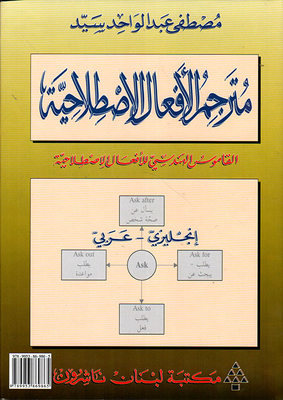
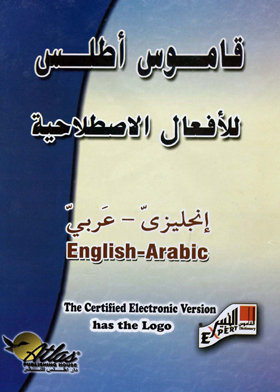
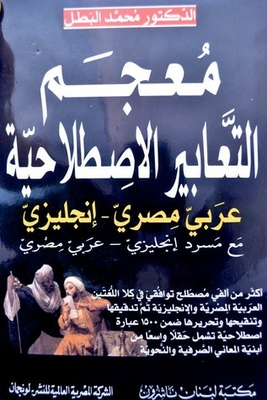
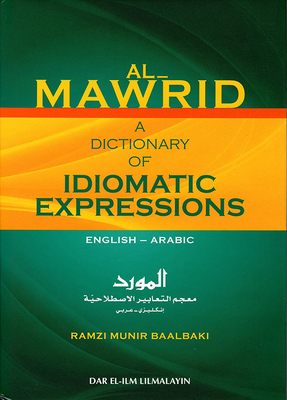
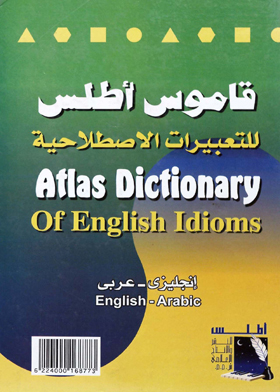
كتب dictionary of english phrasal verbs idiomatic phrase and expressions english arabic
اذا لم تجد ما تبحث عنه يمكنك استخدام كلمات أكثر دقة.
Dictionary of English phrasal verbs, Idiomatic phrase and expressions English- Arabic (كتاب)
Phrasal verbs are an important feature of the English language. Their understanding and use present on insurmountable difficulty for foreign learners as the meaning of a phrasal verb often bears no relation to the meaning of either the verb or particle which is used with it moreover many phrasal verbs have several different meaning and their syntactic behavior is unpredictable.
Another source of difficulty facing foreign learners lies in the use of idiomatic phrases. Foreign learners constantly puzzled by hearing or seeing idioms which carry a meaning that cannot be deduced from a knowledge of the single words composing them. So, to spill the beans is not at all connected with beans: it means “to tell something that is secret”
The present work attempts to help foreign learners overcome such difficulties by providing them with sensation illustrating the use of phrasal verbs and idiomatic phrases and expression in English.
A label is sometimes shown after the subject of the sentence to indicate that the idiom the sentence contains is suitable only in certain situation. The four most important labels used are formal informal, colloquial, and slang. The introduction to the longman dictionary of English idioms (longman, 1979) defines these label as follows:
Formal: indicates that the speaker or writer has a formal relationship with the person or persons he is speaking or writing to. It is used in official letters, public speech, etc. example: lift up one's heart.
Informal: the sentence so labeled is not suitable for use in situation described under formal, but quite acceptable in most other situations when it would be inappropriate to use colloquial or slang. Example : for a rainy day ; a rough diamond.
Colloquial: this indicates that the expression is suitable for use in speech rather than in writing (he writing language is generally more formal). Example : in the same boat
Slang: slang expression are first used in the speech of a specific social group, age group, etc. and only later become more widely used in spoken language. They can never be used in formal situation