مقالات نقدية ومتنوعة: تم جمعها وإعادة نشرها

ترقية حسابك
التحميل مجاناً لكن نقدم بعض الخدمات المدفوعة ادعمنا بالإشتراك فيها
حذف الإعلانات وتسريع تصفح المكتبة.
يبدأ التحميل بضغطة زر دون انتظار تجهيز الكتاب.
لا حدود لمرات التحميل.
يمكنك رفع كتب بلا حدود بالمكتبة.
تمكين القراء من تحميل كتبك دون إنتظار.
حذف الاعلانات على الكتب التي تنشرها.
لا مشاكل في روابط التحميل لكتبك المرفوعة.
تحميل كتاب مقالات نقدية ومتنوعة تم جمعها وإعادة نشرها Pdf
هذا الكتاب ملكية عامة
نُشر هذا الكتاب برخصة المشاع الإبداعي مع ذكر المؤلف والمصدر



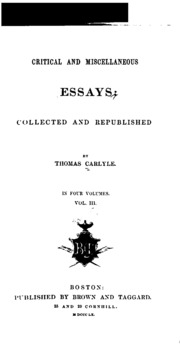
مقالات نقدية ومتنوعة: تم جمعها وإعادة نشرها
| مؤلف: | توماس كارليل |
| قسم: | دراسة نقدية [تعديل] |
| اللغة: | الإنجليزية |
| الناشر: | Chapman and Hall |
| تاريخ الإصدار: | 01 يناير 1869 |
| الصفحات: | 421 |
| حجم الملف: | 9.56 ميجا بايت |
| نوع الملف: | |
| ترتيب الشهرة: | 658,576 رقم 1 هو الأشهر ! |
| رابط مختصر: | نسخ |
| المزيد من الكتب مثل هذا الكتاب | |
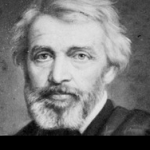
توماس كارليل
المؤلف كتاب مقالات نقدية ومتنوعة: تم جمعها وإعادة نشرها .
Thomas Carlyle, Scottish historian, critic, and sociological writer. was born in the village of Ecclefechan, Dumfriesshire, eldest child of James Carlyle, stonemason, and Margaret (Aitken) Carlyle. The father was stern, irascible, a puritan of the puritans, but withal a man of rigid probity and strength of character. The mother, too, was of the Scottish earth, and Thomas' education was begun at ho Thomas Carlyle, Scottish historian, critic, and sociological writer. was born in the village of Ecclefechan, Dumfriesshire, eldest child of James Carlyle, stonemason, and Margaret (Aitken) Carlyle. The father was stern, irascible, a puritan of the puritans, but withal a man of rigid probity and strength of character. The mother, too, was of the Scottish earth, and Thomas' education was begun at home by both the parents. From the age of five to nine he was at the village school; from nine to fourteen at Annan Grammar School. where he showed proficiency in mathematics and was well grounded in French and Latin. In November 1809 he walked to Edinburgh, and attended courses at the University till 1814, with the ultimate aim of becoming a minister. He left without a degree, became a mathematical tutor at Annan Academy in 1814, and three years later abandoned all thoughts of entering the Kirk, having reached a theological position incompatible with its teachings. He had begun to learn German in Edinburgh, and had done much independent reading outside the regular curriculum. Late in 1816 he moved to a school in Kirkcaldy, where he became the intimate associate of Edward Irving, an old boy of Annan School, and now also a schoolmaster. This contact was Carlyle's first experience of true intellectual companionship, and the two men became lifelong friends. He remained there two years, was attracted by Margaret Gordon, a lady of good family (whose friends vetoed an engagement), and in October 1818 gave up schoolmastering and went to Edinburgh, where he took mathematical pupils and made some show of reading law.
During this period in the Scottish capital he began to suffer agonies from a gastric complaint which continued to torment him all his life, and may well have played a large part in shaping the rugged, rude fabric of his philosophy. In literature he had at first little success, a series of articles for the Edinburgh Encyclopaedia bringing in little money and no special credit. In 1820 and 1821 he visited Irving in Glasgow and made long stays at his father's new farm, Mainhill; and in June 1821, in Leith Walk, Edinburgh, he experienced a striking spiritual rebirth which is related in Sartor Resartus. Put briefly and prosaically, it consisted in a sudden clearing away of doubts as to the beneficent organization of the universe; a semi-mystical conviction that he was free to think and work, and that honest effort and striving would not be thwarted by what he called the "Everlasting No."
For about a year, from the spring of 1823, Carlyle was tutor to Charles and Arthur Buller, young men of substance, first in Edinburgh and later at Dunkeld. Now likewise appeared the first fruits of his deep studies in German, the Life of Schiller, which was published serially in the London Magazine in 1823-24 and issued as a separate volume in 1825. A second garner from the same field was his version of Goethe's Wilhelm Meister which earned the praise of Blackwood's and was at once recognized as a very masterly rendering.
In 1821 Irving had gone to London, and in June 1821 Carlyle followed, in the train of his employers, the Bullers. But he soon resigned his tutorship, and, after a few weeks at Birmingham, trying a dyspepsia cure, he lived with Irving at Pentonville, London, and paid a short visit to Paris. March 1825 saw him back; in Scotland, on his brother's farm, Hoddam Hill, near the Solway. Here for a year he worked hard at German translations, perhaps serenely than before or after and free from that noise which was always a curse to his sensitive ear and which later caused him to build a sound-proof room in his Chelsea home.
Before leaving for London Irving had introduced Carlyle to Jane Baillie Welsh daughter of the surgeon, John Welsh, and descended from John Knox. She was beautiful, precociously learned, talented, and a brilliant mistress of cynical satire. Among her numerous suitors, the rough, uncouth
وصف الكتاب
Book digitized by Google from the library of Harvard University and uploaded to the Internet Archive by user tpb.


شارك الكتاب :
مراجعة كتاب "مقالات نقدية ومتنوعة: تم جمعها وإعادة نشرها"

اقتباسات كتاب "مقالات نقدية ومتنوعة: تم جمعها وإعادة نشرها"

كتب أخرى مثل "مقالات نقدية ومتنوعة: تم جمعها وإعادة نشرها"








فى حالة وجود مشكلة بالكتاب الرجاء الإبلاغ من خلال أحد الروابط التالية:
بلّغ عن الكتاب أو من خلال التواصل معنا
الكتب الإلكترونية هي مكملة وداعمة للكتب الورقية ولا تلغيه أبداً بضغطة زر يصل الكتاب الإلكتروني لأي شخص بأي مكان بالعالم.
قد يضعف نظرك بسبب توهج الشاشة، أدعم ناشر الكتاب بشراءك لكتابه الورقي الأصلي إذا تمكنت من الوصول له والحصول عليه فلا تتردد بشراءه.
أنشر كتابك الآن مجانا