كتب التكامل بين اللسانيات والعلوم الإنسانية والاجتماعية في إبراز هدايات القصص القرآني لمكافحة خطاب الكراهية
اذا لم تجد ما تبحث عنه يمكنك استخدام كلمات أكثر دقة.
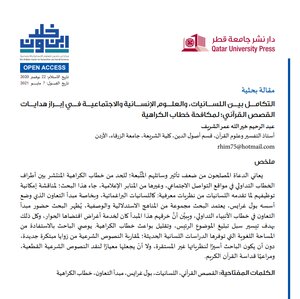
التكامل بين اللسانيات والعلوم الإنسانية والاجتماعية في إبراز هدايات القصص القرآني لمكافحة خطاب الكراهية (كتاب)
يعاني المصلحون من المشتغلين في علوم الشريعة والقانون والتربية والسلوك والاجتماع والإعلام والسياسة من ضعف تأثير وسائلهم المتبعة للحد من خطاب الكراهية المنتشر بين أطراف الخطاب التداولي في مواقع التواصل الاجتماعي وغيرها من المنابر الإعلامية، فجاء هذا البحث لمناقشة إمكانية استفادتهم مما تقدمه اللسانيات من نظريات معرفية - كاللسانيات البراغماتية، وبخاصة مبدأ التعاون الذي وضع أسسه بول غرايس –، والاستدلال على مشروعيته وفائدة تطبيقه من خلال دراسة أثر حضوره في خطاب الأنبياء التداولي، بمباحث ثلاثة: سيُخصص الأول للإطار النظري، والثاني للأمثلة التطبيقية، والثالث للنظر في مشروعية التكامل بين المعارف المرتبطة بكلٍّ من الثقافة الإسلامية واللسانيات المعاصرة.
وقد خلصت الدراسة إلى إثبات حضور مبدأ التعاون في خطاب الأنبياء التداولي – بشكل عام -، وأنَّ خرق المبدأ كان لخدمة أغراض اقتضاها الحوار، وكل ذلك بهدف تيسير سبل تبليغ الموضوع الرئيس، وتقليل بواعث خطاب الكراهية.
Towards an investment of the complementary interaction outputs between linguistics, humanities and social sciences,
Highlighting the guidance of Quranic stories to combat hate speech as a model
The reformists who work in the sciences of Sharia, law, education, behavior, sociology, media and politics suffer from the weak influence of their methods of curbing the hate speech spread in the different types of interaction and dialogue on social media and other media outlets. This research came to discuss the possibility to benefit from epistemological theories presented by linguistics - such as pragmatics. Special attention is paid to the Cooperation Principles suggested by Paul Grice - and inferring its application and utility by studying the impact of the presence if such principles in the prophets' interactions and dialogues with their people. This argument is presented in three topics: the first is devoted to the theoretical framework, the second to practical examples, and the third to consider the integration between knowledge related to each of the Islamic culture and contemporary linguistics.
The study ends with demonstrating the presence of the Cooperation Principle in the prophets’ interaction and dialogue - in general - and that the breach of a principle was in the form of a conversational implicature. This aims to serve the purposes of the discourse; all with the aim of facilitating the means of communicating the main issue and reducing the motives of hate speech.