كتب al ha iyyah الأنوار الجلية في شرح المنظومة الحائية
اذا لم تجد ما تبحث عنه يمكنك استخدام كلمات أكثر دقة.

AL-HA'IYYAH - الأنوار الجلية في شرح المنظومة الحائية (كتاب)
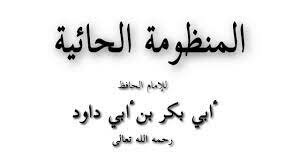
Before you is a commentary on the Mandhûmatu Al-Hâ’iyyah, a short but profound poem on the Islamic Creed (Aqidah) composed by the great scholar Imam Abu Bakr ibn Abi Dawud As-Sijistâni’ (may Allah have mercy on him). My intention in putting this work together was to take these thirty-three verses and break them down into an explanation that speaks to the English–speaking seeker of knowledge in a way that is direct, clear, and grounded.
The Al-Hâ’iyyah is not just a piece of poetry; it is a fortress. It was written in a time when confusion was spreading, and the Imam saw the need to anchor the people back to what was essential. In just a few lines, he manages to walk us through the most critical pillars of our fait h: how we understand the Speech of Allah, the High Exalted, the reality of seeing our Lord, the Most High, in the Hereafter, our unwavering love and respect for the Companions (peace be upon him), and the peace that comes with submitting to the Divine Decree. It is a text that every student of knowledge should keep close to their heart.
The Story Behind This Work
Writing this commentary was not a sudden decision, but rather the result of a long-standing realization. In my years of engaging with students, I noticed that while there are many translations of these classical texts, there is often a gap.
Some explanations are so academic that they feel cold and distant, while others are so brief that the reader misses the spirit of why these words were written in the first place. I wanted to write something that felt like a classroom session – a shared journey between a teacher and a student where the facts are solid, but the tone is warm and encouraging.
The true spark for this work came to me in January 2026. I felt a deep, internal urgency to stop delaying and finally put these thoughts onto paper. I spent many nights in prayer, asking Allah, the High Exalted, to open my heart, to sharpen my mind, and to allow me to explain these heavy theological truths in a way that truly transforms the person reading them. I wanted this to be a work that doesn’t just fill a shelf, but one that rectifies the heart. By the Grace of Allah, the Almighty, I was able to bring this effort to its completion on Friday, 17th April 2026. I hope that the years of study, reflection, and teaching are felt in these words, and that this book serves as a sincere companion for anyone seeking the truth. May the Almighty make this book blessed, acceptable and rewardable.
Methodology of this Commentary
To make this book a truly practical tool for your study, I have broken down the explanation of these thirty-three verses into five clear layers. My goal with this structure is to help you see how the language itself works, while also making sure you don’t lose sight of the deeper, spiritual message behind the words:
• Arabic Matn (Text): I begin with each verse exactly as the Imam wrote it. It is essential to keep the original words in front of us, as the power and precision of the creed are tied directly to the language of the author.
• Translation: I provide a straightforward English rendering of the verse. I have worked to keep it fluid and easy to read so that the meaning is clear at a first glance.
• Key Vocabulary: In this section, I do more than just pick out the heavy or technical terms. I take the time to explain the words and roots within every verse, showing how they function in a technical sense. I have chosen not to skip over even the simpler words or prepositions, as I believe every part of the verse plays a role in accurately shaping our understanding of the creed.
• Proofs (Istishhād): No point of creed stands on its own. Every explanation is backed up with clear evidence from the Noble Qur’an and the authentic Sunnah of the Prophet (peace and blessings of Allah be upon him), ensuring that our understanding is always anchored in revelation.
• Commentary (Sharh): This is where we go deeper. I move beyond the literal words to explain the why and how – the history behind the verse, why the Imam calls out certain groups, and what these lessons mean for us today. I have written this as if we were sitting together in a study circle, focusing on the real-world impact these truths should have on our hearts.
The Objectives of this Book
I did not write this book merely to add another title to a library shelf. My sincere hope is that this work achieves specific, meaningful goals for everyone who picks it up:
To build a Foundation of Certainty: We live in an age filled with doubt and gray areas that can leave a believer feeling unsettled. My first goal is to provide you with a clear, black and white understanding of your faith, so you know exactly where you stand and – more importantly – why you stand there.
To revive the Way of the Salaf: I want to show the reader that the creed of Salaf we hold today isn’t a new version of Islam. It is the very same belief held by the Sahaba, the Tâbi’un (their Followers), and the great Four Imams of Madhâhib. I intend for this book to serve as a bridge back to that golden era of clarity.
To find Spiritual Peace: There is a deep, psychological anxiety that comes from having a confused or wavering heart. By truly grasping matters like Qadar (Divine Decree) and Allah’s expansive Mercy, that anxiety can be replaced by a profound sense of trust, tranquility, happiness, unwavering faith, and stillness.
To guard against Extremes: One of my major aims is to highlight the Middle Path. I want to protect the student from the harshness that leads to unnecessary conflict and isolation, as well as the religious laziness that leads to a weak and hollow faith, like that found among the Mu’tazilah, the Khawârij, and all sects.
I ask Allah, the Most High, to accept this humble effort. I pray that He makes it a source of benefit for the Ummah and a means for us all to gain a deeper, more sincere understanding of the path of His Messenger (peace be upon him).