كتب 100 most influential people by micheal hart second edition
اذا لم تجد ما تبحث عنه يمكنك استخدام كلمات أكثر دقة.
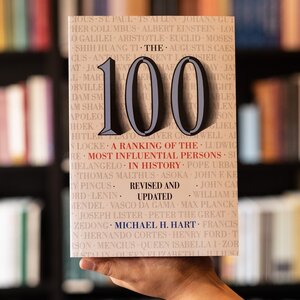
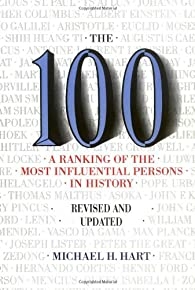
100 most influential people by Micheal Hart second edition (كتاب)
The book consists of 100 entries as well as an appendix of Honorable Mentions. Each entry is a short biography of the person, followed by Hart's thoughts on how this person was influential and changed the course of human history. He gave additional credit for importance for people whose actions Hart felt were unusual, unlikely, or ahead of their time compared to a hypothesized course of history had this person not lived.
Founders and shapers of successful religions were among the most influential in Hart's view, as these shaped many people's lives quite strongly over a long period of time. The first person on Hart's list is the Islamic prophet Muhammad.[7][8] Hart asserted that Muhammad was "supremely successful" in both the religious and secular realms, being responsible for both the foundations of Islam as well as the Early Muslim conquests uniting the Arabian Peninsula and eventually a wider caliphate after his death. Hart also believed that Muhammad played an unusually singular and personal role in the development of Islam.[9][10] The development of Christianity, by contrast, has its influence split between Jesus's initial teachings and foundational work, and Paul the Apostle, who played a pivotal role in the early spread of Christianity as well as distinguishing its doctrines and practices from Judaism and the other Greek and Roman religions of the time period.[11] Gautama Buddha, Confucius, and Moses are all placed highly as well due to their role in establishing religions.
One of the most notable omissions was Abraham Lincoln, which Hart relegated to the "Honorary Mentions" in the appendix. Changes in the 1992 revision include the rankings of figures associated with Communism being lowered after the Revolutions of 1989, such as Vladimir Lenin and Mao Zedong, and the introduction of Mikhail Gorbachev. Hart took sides in the Shakespearean authorship issue and replaced William Shakespeare with Edward de Vere, 17th Earl of Oxford in the 1992 version. Hart also substituted Niels Bohr and Henri Becquerel with Ernest Rutherford. Henry Ford was promoted from the "Honorary Mentions" list, replacing Pablo Picasso. Finally, various rankings were re-ordered, although no one listed in the top ten changed their position.[4]
The book was first published in 1978 as imprint from "Hart Publishing Company".[1][2] According to the Calgary Herald, at least 60,000 copies were sold.[12] The book has since been translated into many languages.[13]