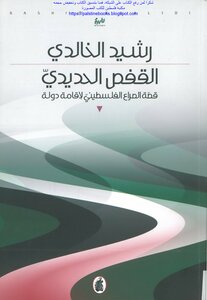
القفص الحديدي: قصة النضال الفلسطيني من أجل إقامة دولة

ترقية حسابك
التحميل مجاناً لكن نقدم بعض الخدمات المدفوعة ادعمنا بالإشتراك فيها
حذف الإعلانات وتسريع تصفح المكتبة.
يبدأ التحميل بضغطة زر دون انتظار تجهيز الكتاب.
لا حدود لمرات التحميل.
يمكنك رفع كتب بلا حدود بالمكتبة.
تمكين القراء من تحميل كتبك دون إنتظار.
حذف الاعلانات على الكتب التي تنشرها.
لا مشاكل في روابط التحميل لكتبك المرفوعة.
كتاب القفص الحديدي قصة النضال الفلسطيني من أجل إقامة دولة
حقوق النشر محفوظة
لا يمكن قراءة الكتاب أو تحميله حفاظاً على حقوق نشر المؤلف و دار النشر
غير متوفر رقمياً أو ورقياً من خلال مكتبة نور، متروك للتقييم والمراجعة



القفص الحديدي: قصة النضال الفلسطيني من أجل إقامة دولة
| مؤلف: | راشد خليدى |
| قسم: | الصراع الفلسطيني الإسرائيلي وتحرير القدس وفلسطين [تعديل] |
| اللغة: | الإنجليزية |
| الناشر: | Beacon Press |
| تاريخ الإصدار: | 01 يناير 2006 |
| ترتيب الشهرة: | 541,635 رقم 1 هو الأشهر ! |
| رابط مختصر: | نسخ |
| المزيد من الكتب مثل هذا الكتاب | |
وصف الكتاب
Named an outstanding title of 2006 by Publishers Weekly At a time when a lasting peace between the Palestinians and the Israelis seems virtually unattainable, understanding the roots of their conflict is an essential step in restoring hope to the region. In The Iron Cage, Rashid Khalidi, one of the most respected historians and political observers of the Middle East, homes in on Palestinian politics and history. By drawing on a wealth of experience and scholarship, Khalidi provides a lucid context for the realities on the ground today, a context that has been, until now, notably lacking in our discourse. The story of the Palestinian search to establish a state begins in the mandate period immediately following the breakup of the Ottoman Empire, the era of British control, when fledgling Arab states were established by the colonial powers with assurances of eventual independence. Mandatory Palestine was a place of real promise, with unusually high literacy rates and a relatively advanced economy. But the British had already begun to construct an iron cage to hem in the Palestinians, and the Palestinian leadership made a series of errors that would eventually prove crippling to their dream of independence. The Palestinians’ struggle intensified in the stretch before and after World War II, when colonial control of the region became increasingly unpopular, population shifts began with heavy Jewish immigration from Eastern Europe, and power began to devolve to the United States. In this crucial period, Palestinian leaders continued to run up against the walls of the ever-constricting iron cage. They proved unable to achieve their long-cherished goal of establishing an independent statea critical failure that set a course for the decades that followed, right through the eras of the Palestinian Liberation Organization, the Palestinian Authority, and Hamas. Rashid Khalidi’s engrossing narrative of this torturous history offers much-needed perspective for anyone concerned about peace in the Middle East. In his new book The Iron Cage Rashid Khalidi uses history to provide a clear-eyed view of the region and assess the prospects for peace .He strives successfully for even-handedness He’s fair to both sides, and in particular, he’s knowledgeable not only about Palestinian history but about what he has called tragic Jewish history.” Anthony Lewis Dr. Rashid Khalidi, author of Resurrecting Empire and Palestinian Identity, holds the Edward Said Chair in Arab Studies at Columbia University, where he heads the Middle East Institute. He has written more than eighty articles on Middle Eastern history and politics, as well as op-ed pieces in the New York Times, the Boston Globe, the Los Angeles Times, the Chicago Tribune, and The Nation. He lives in New York. Praise for Resurrecting Empire Mr. Kahlidi’s book will certainly be useful to all those outside the region who are engaged in the difficult yet crucial task of devising ways to help foster change in the Middle East.” Ivo H. Daalder, New York Times Khalidi makes a powerful case for a more evenhanded policy toward the Israeli-Palestinian conflictand for the rejection of the dangerous ambition of making the United States an imperial power in the Middle East.” Warren I. Cohen, Los Angeles Times With a deep knowledge of the Middle East and a felicitous literary style, Khalidi . . . examines the history of U.S. involvement in the area against the backdrop of European colonialism and shows why an assertion of our good intentions has little meaning for peoples who have known two centuries of foreign occupation and domination.” Ronald Steel, The Nation Khalidi, armed with a deep knowledge of the region, demonstrates that the legacy of past empires has conditioned present-day Middle Easterners to resist outside control, direct or indirect.” L. Carl Brown, Foreign Affairs Khalidi brings firsthand knowledge and an extensive historical backgrouund to a topic where such insight is needed more than ever.” Joseph Stiglitz, winner of the Nobel Prize, author of The Roaring Nineties

حقوق النشر محفوظة
لا يمكن قراءة الكتاب أو تحميله حفاظاً على حقوق نشر المؤلف و دار النشر
غير متوفر رقمياً أو ورقياً من خلال مكتبة نور، متروك للتقييم والمراجعة
شارك الكتاب :
مراجعة كتاب "القفص الحديدي: قصة النضال الفلسطيني من أجل إقامة دولة"

اقتباسات كتاب "القفص الحديدي: قصة النضال الفلسطيني من أجل إقامة دولة"

كتب أخرى مثل "القفص الحديدي: قصة النضال الفلسطيني من أجل إقامة دولة"











كتب أخرى لـ "راشد خليدى"


فى حالة وجود مشكلة بالكتاب الرجاء الإبلاغ من خلال أحد الروابط التالية:
بلّغ عن الكتاب أو من خلال التواصل معنا
الكتب الإلكترونية هي مكملة وداعمة للكتب الورقية ولا تلغيه أبداً بضغطة زر يصل الكتاب الإلكتروني لأي شخص بأي مكان بالعالم.
قد يضعف نظرك بسبب توهج الشاشة، أدعم ناشر الكتاب بشراءك لكتابه الورقي الأصلي إذا تمكنت من الوصول له والحصول عليه فلا تتردد بشراءه.
أنشر كتابك الآن مجانا