عناقيد الغضب

ترقية حسابك
التحميل مجاناً لكن نقدم بعض الخدمات المدفوعة ادعمنا بالإشتراك فيها
حذف الإعلانات وتسريع تصفح المكتبة.
يبدأ التحميل بضغطة زر دون انتظار تجهيز الكتاب.
لا حدود لمرات التحميل.
يمكنك رفع كتب بلا حدود بالمكتبة.
تمكين القراء من تحميل كتبك دون إنتظار.
حذف الاعلانات على الكتب التي تنشرها.
لا مشاكل في روابط التحميل لكتبك المرفوعة.
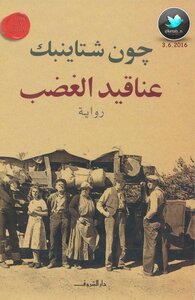
كتاب عناقيد الغضب
حقوق النشر محفوظة
لا يمكن قراءة الكتاب أو تحميله حفاظاً على حقوق نشر المؤلف و دار النشر
غير متوفر رقمياً أو ورقياً من خلال مكتبة نور، متروك للتقييم والمراجعة



عناقيد الغضب
| مؤلف: | جون شتاينبك |
| قسم: | قسم غير محدد [تعديل] |
| اللغة: | الإنجليزية |
| الناشر: | Penguin Classics |
| ردمك ISBN: | 143039431 |
| تاريخ الإصدار: | 01 يناير 2006 |
| الصفحات: | 480 |
| ترتيب الشهرة: | 376,752 رقم 1 هو الأشهر ! |
| رابط مختصر: | نسخ |
| المزيد من الكتب مثل هذا الكتاب | |
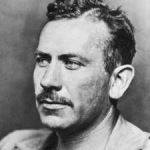
جون شتاينبك
المؤلف كتاب عناقيد الغضب والمؤلف لـ 11 كتب أخرى.
John Steinbeck III was an American writer. He wrote the Pulitzer Prize-winning novel The Grapes of Wrath, published in 1939 and the novella Of Mice and Men, published in 1937. In all, he wrote twenty-five books, including sixteen novels, six non-fiction books and several collections of short stories.
In 1962 Steinbeck received the Nobel Prize for Literature.
Steinbeck grew up in the Salinas Valley John Steinbeck III was an American writer. He wrote the Pulitzer Prize-winning novel The Grapes of Wrath, published in 1939 and the novella Of Mice and Men, published in 1937. In all, he wrote twenty-five books, including sixteen novels, six non-fiction books and several collections of short stories.
In 1962 Steinbeck received the Nobel Prize for Literature.
Steinbeck grew up in the Salinas Valley region of California, a culturally diverse place of rich migratory and immigrant history. This upbringing imparted a regionalistic flavor to his writing, giving many of his works a distinct sense of place.
Steinbeck moved briefly to New York City, but soon returned home to California to begin his career as a writer. Most of his earlier work dealt with subjects familiar to him from his formative years. An exception was his first novel Cup of Gold which concerns the pirate Henry Morgan, whose adventures had captured Steinbeck's imagination as a child.
In his subsequent novels, Steinbeck found a authentic voice by drawing upon direct memories of his life in California. Later he used real historical conditions and events in the first half of 20th century America, which he had experienced first-hand as a reporter.
Steinbeck often populated his stories with struggling characters; his works examined the lives of the working class and migrant workers during the Dust Bowl and the Great Depression. His later body of work reflected his wide range of interests, including marine biology, politics, religion, history, and mythology.
One of his last published works was Travels with Charley, a travelogue of a road trip he took in 1960 to rediscover America. He died in 1968 in New York of a heart attack and his ashes are interred in Salinas.
Seventeen of his works, including The Grapes of Wrath (1940), Cannery Row (1945), The Pearl (1947), and East of Eden (1952), went on to become Hollywood films, and Steinbeck also achieved success as a Hollywood writer, receiving an Academy Award nomination for Best Story in 1944 for Alfred Hitchcock's Lifeboat.
وصف الكتاب
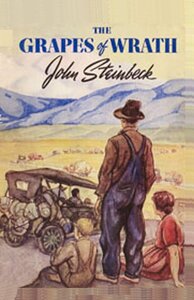
Today, nearly forty years after his death, Nobel Prize winner John Steinbeck remains one of America’s greatest writers and cultural figures. Over the next year, his many works published as black-spine Penguin Classics for the first time and will feature eye-catching, newly commissioned art. The Grapes of Wrath is a landmark of American literature. A portrait of the conflict between the powerful and the powerless, of one man’s fierce reaction to injustice, and of one woman’s stoical strength, the novel captures the horrors of the Great Depression and probes into the very nature of equality and justice in America. Although it follows the movement of thousands of men and women and the transformation of an entire nation, The Grapes of Wrath is also the story of one Oklahoma family, the Joads, who are driven off their homestead and forced to travel west to the promised land of California. Out of their trials and their repeated collisions against the hard realities of an America divided into Haves and Have-Nots evolves a drama that is intensely human yet majestic in its scale and moral vision, elemental yet plainspoken, tragic but ultimately stirring in its human dignity. First published in 1939, The Grapes of Wrath summed up its era in the way that Uncle Tom’s Cabin summed up the years of slavery before the Civil War. Sensitive to fascist and communist criticism, Steinbeck insisted that “The Battle Hymn of the Republic” be printed in its entirety in the first edition of the book—which takes its title from the first verse: “He is trampling out the vintage where the grapes of wrath are stored.” At once a naturalistic epic, captivity narrative, road novel, and transcendental gospel, Steinbeck’s fictional chronicle of the Dust Bowl migration of the 1930s is perhaps the most American of American Classics.

حقوق النشر محفوظة
لا يمكن قراءة الكتاب أو تحميله حفاظاً على حقوق نشر المؤلف و دار النشر
غير متوفر رقمياً أو ورقياً من خلال مكتبة نور، متروك للتقييم والمراجعة
شارك الكتاب :
مراجعة كتاب "عناقيد الغضب"

اقتباسات كتاب "عناقيد الغضب"

كتب أخرى مثل "عناقيد الغضب"





كتب أخرى لـ "جون شتاينبك"



فى حالة وجود مشكلة بالكتاب الرجاء الإبلاغ من خلال أحد الروابط التالية:
بلّغ عن الكتاب أو من خلال التواصل معنا
الكتب الإلكترونية هي مكملة وداعمة للكتب الورقية ولا تلغيه أبداً بضغطة زر يصل الكتاب الإلكتروني لأي شخص بأي مكان بالعالم.
قد يضعف نظرك بسبب توهج الشاشة، أدعم ناشر الكتاب بشراءك لكتابه الورقي الأصلي إذا تمكنت من الوصول له والحصول عليه فلا تتردد بشراءه.
أنشر كتابك الآن مجانا